
How to count headache days (and what chronic migraine means)
A headache day is any calendar day on which you had a headache, however long it lasted. Count them per month. Doctors use this number — not the number of attacks — to tell episodic migraine from chronic migraine and to judge whether a treatment is working.
Short answer: mark each calendar day with any headache as a headache day, even if it lasted an hour. An attack that runs from Monday night into Wednesday counts as three headache days. Chronic migraine means headache on 15 or more days a month for more than three months, with migraine features on at least 8 of them.
Headache days vs attacks
Attacks and headache days aren’t the same thing:
- One long attack can cover several headache days.
- Two short attacks on the same day are two attacks but one headache day.
Headache days are the standard measure in clinical guidelines and treatment studies, so they’re what your doctor will ask for.
How to count them
- Use a calendar or diary and mark every day with any headache.
- For attacks that cross midnight, mark every calendar day they touch.
- Add up the marked days at the end of each month.
- Count migraine days separately if your doctor asks — days with migraine features such as throbbing one-sided pain, nausea, or sensitivity to light and sound.
- Keep pain-free days visible too. A longest pain-free stretch is encouraging and useful.
Episodic vs chronic migraine
| Episodic migraine | Chronic migraine | |
|---|---|---|
| Headache days per month | Fewer than 15 | 15 or more, for more than 3 months |
| Migraine-type days | — | At least 8 per month |
These definitions come from the International Classification of Headache Disorders (ICHD-3). Only a doctor can diagnose chronic migraine, but your counts give them what they need. Moving from episodic to chronic, or back, matters for treatment choices.
Why the number matters
- Treatment decisions. Preventive treatment is often considered when headache days are frequent or attacks are disabling.
- Judging treatment. A drop in monthly headache days is the usual way to tell whether a preventive is working.
- Spotting overuse. Rising headache days alongside frequent painkiller use can point to medication overuse headache.
Headache days in Migraine Tracker
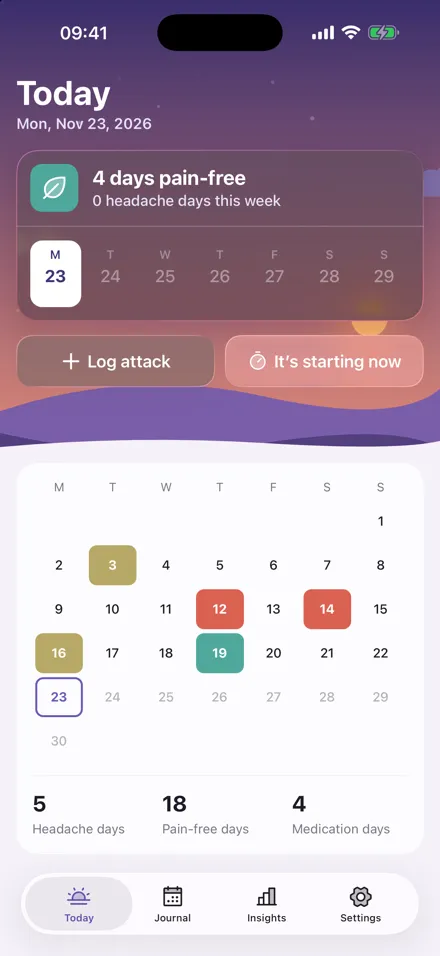
Migraine Tracker counts headache days automatically — each day an attack started on counts once, however many attacks you logged that day. The month calendar colours each headache day by intensity, the Today screen compares this month with last month, and insights show monthly trends and your longest pain-free streak. If you reach 15 or more headache days in the last 30, the app points it out so you can raise it with your doctor.
This guide is general information, not medical advice. If your headaches change, get worse, or come with new symptoms, see a doctor.