
Log migraines in one tap. Find what sets them off.
Start a live timer the moment an attack begins, add triggers and medicines when you feel better, and let Migraine Tracker show you the patterns — and a report your doctor can read in a minute.
Free to download · Optional Premium · Your journal stays on your device

Get Migraine Tracker
Free on the App Store for iPhone and iPad (iOS 17.6 or later). English and Russian.
A calm migraine tracker you can use in a dark room
People open a migraine app while they’re in pain. So logging takes one tap, details can wait, and every chart answers a plain question.
Log migraines in one tap
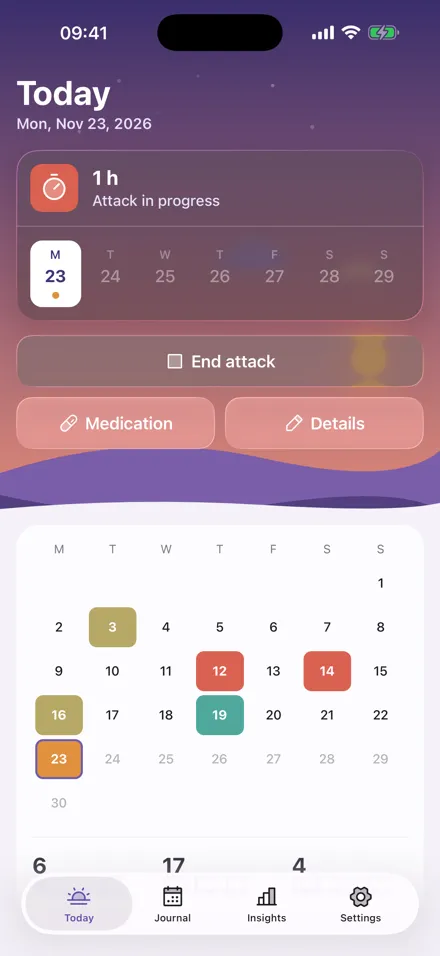
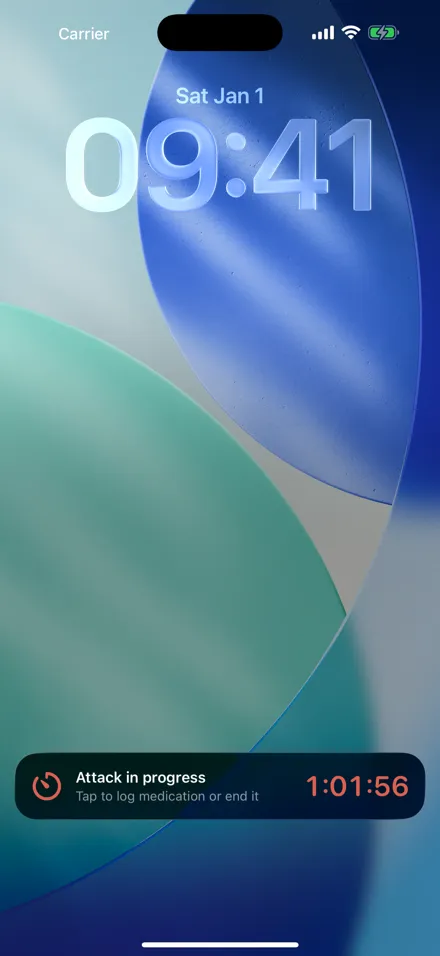
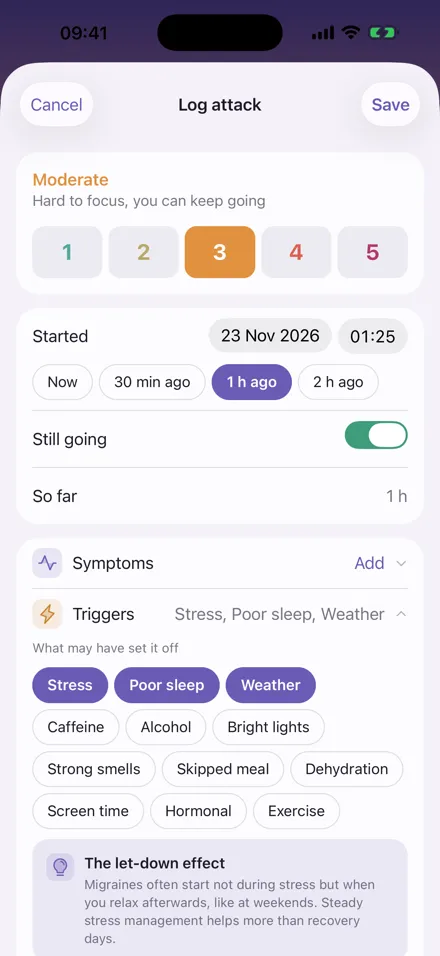
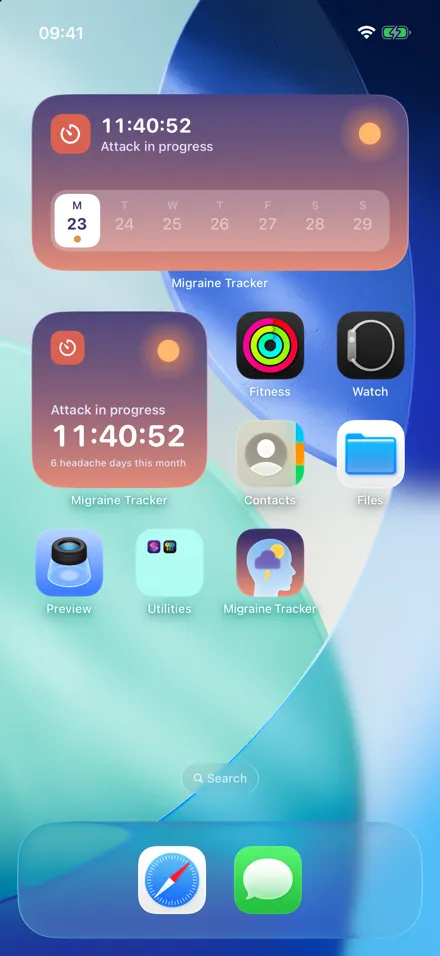
Tap once when the pain starts. A live timer runs on your Lock Screen and in the Dynamic Island, so you always know how long this attack has lasted — and the duration is exact when you end it.
- Live Activity with the attack timer
- Log a past attack with a time of day or exact time
- Intensity on a 1–5 scale, always shown with the number
Find your real triggers
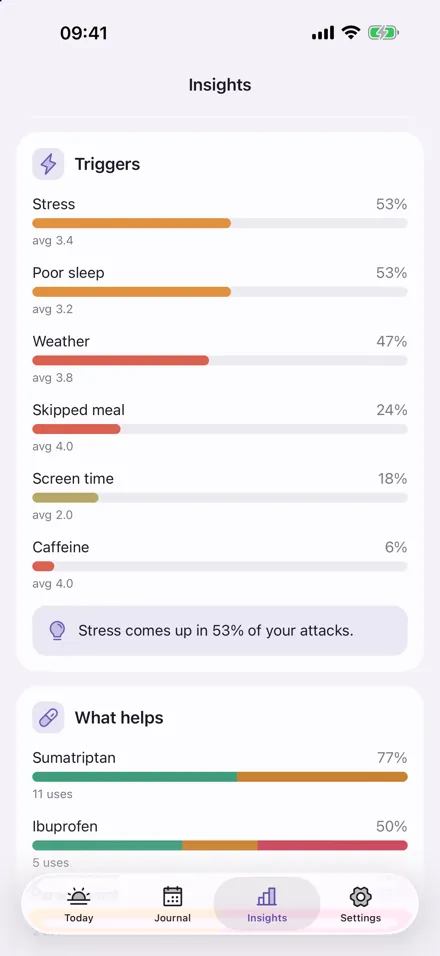
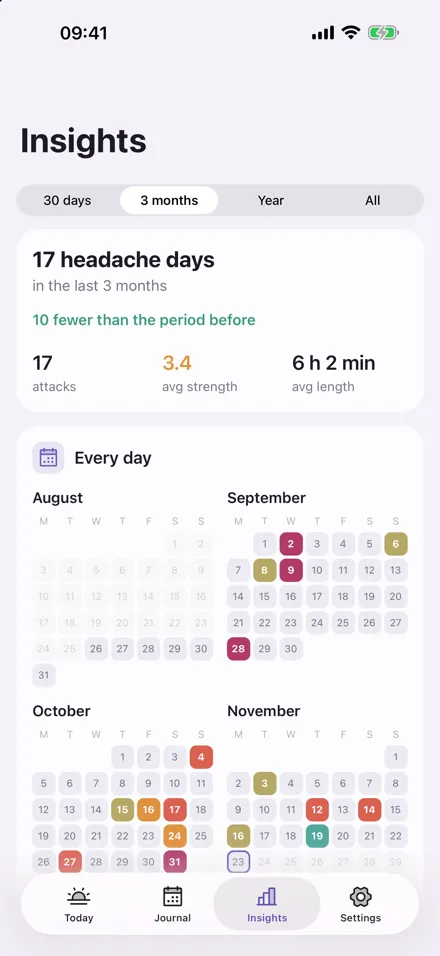
Tag stress, poor sleep, weather, skipped meals, screen time, caffeine — or your own. Insights rank triggers by how often they show up and how bad those attacks were, with a one-line takeaway.
- Share of attacks per trigger, with average intensity
- Symptoms, time of day and weekday patterns
- Your own triggers, symptoms and medicines with Premium
A report for your doctor
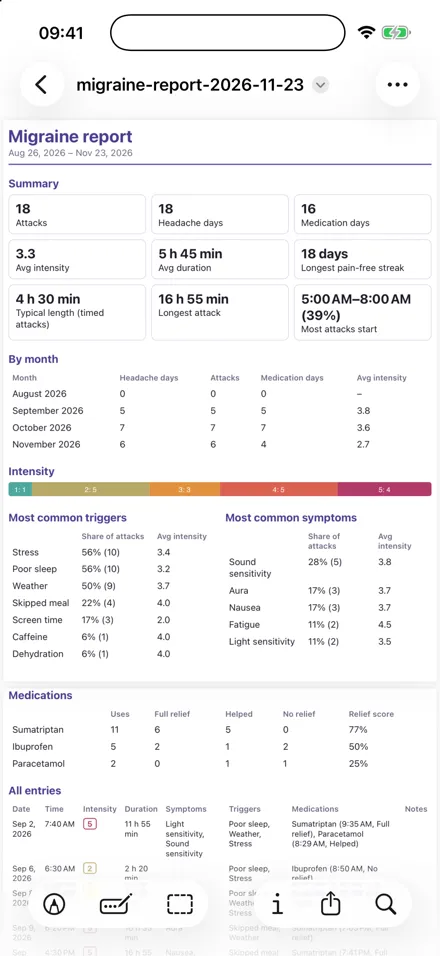
Make a PDF that sums up headache days, attacks, intensity, triggers and medicine use — the last 90 days by default. Share it from your phone or print it before the appointment.
- Monthly headache and medication days
- Which medicines helped and how much
- A warning when medicine days get close to overuse limits
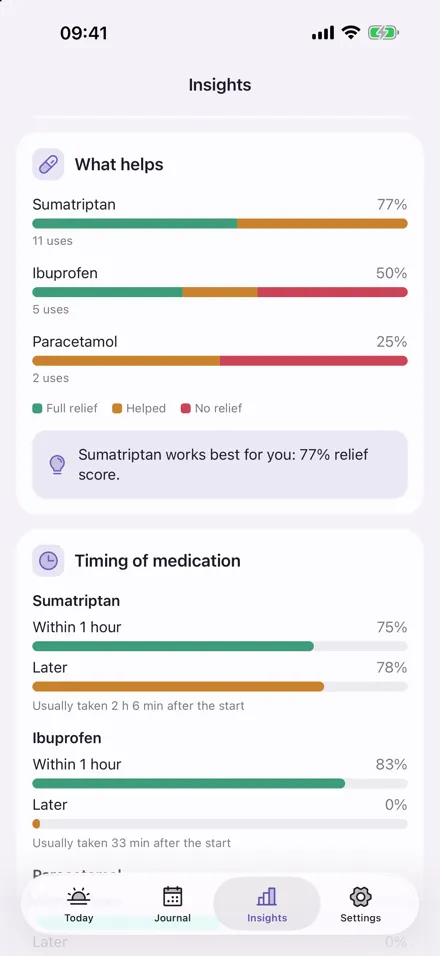
See which meds help
Rate each medicine you took — now or later, when the app asks “Did it help?”. Migraine Tracker shows the share of doses that brought full, partial or no relief.
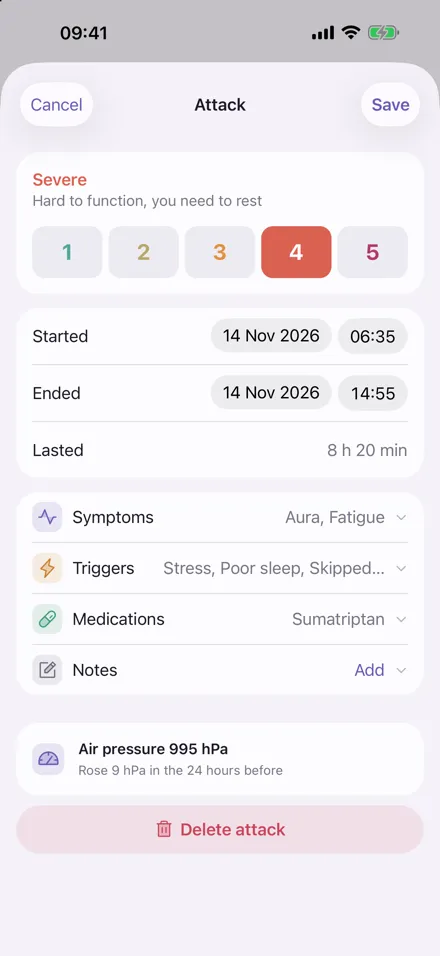
Is it the weather?
Turn on air pressure and each attack saves the local pressure and how much it changed in the 24 hours before. After enough attacks, the app tells you whether attacks are more common after a pressure drop.
Pressure comes from Open-Meteo for an area of about 10 km around you. Only that rough area is sent, and it isn’t stored.
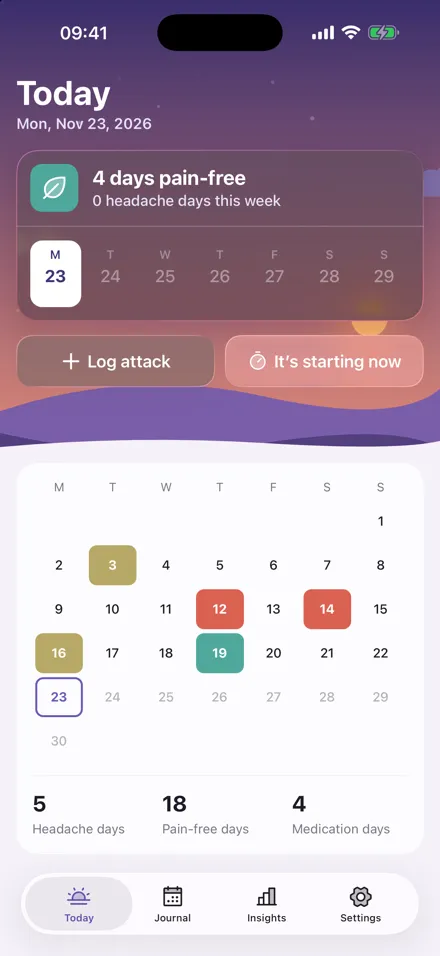
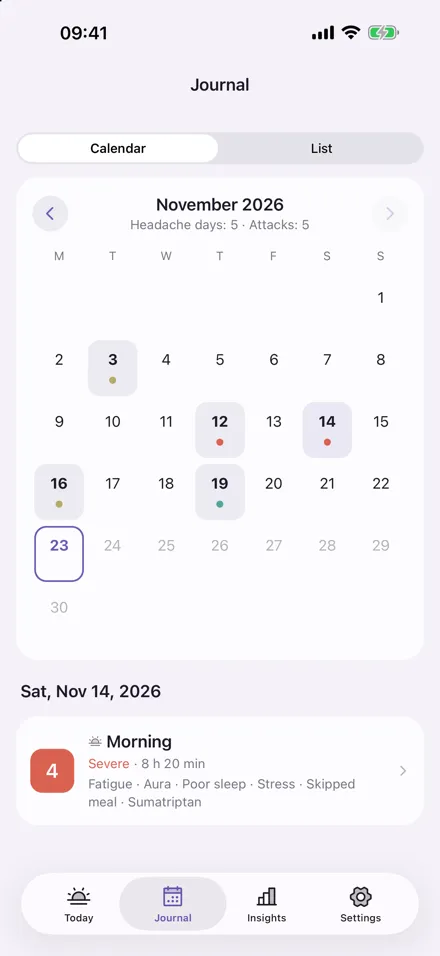
Every month at a glance
The journal colours each day by intensity. Home Screen widgets show pain-free days or the running attack without opening the app.
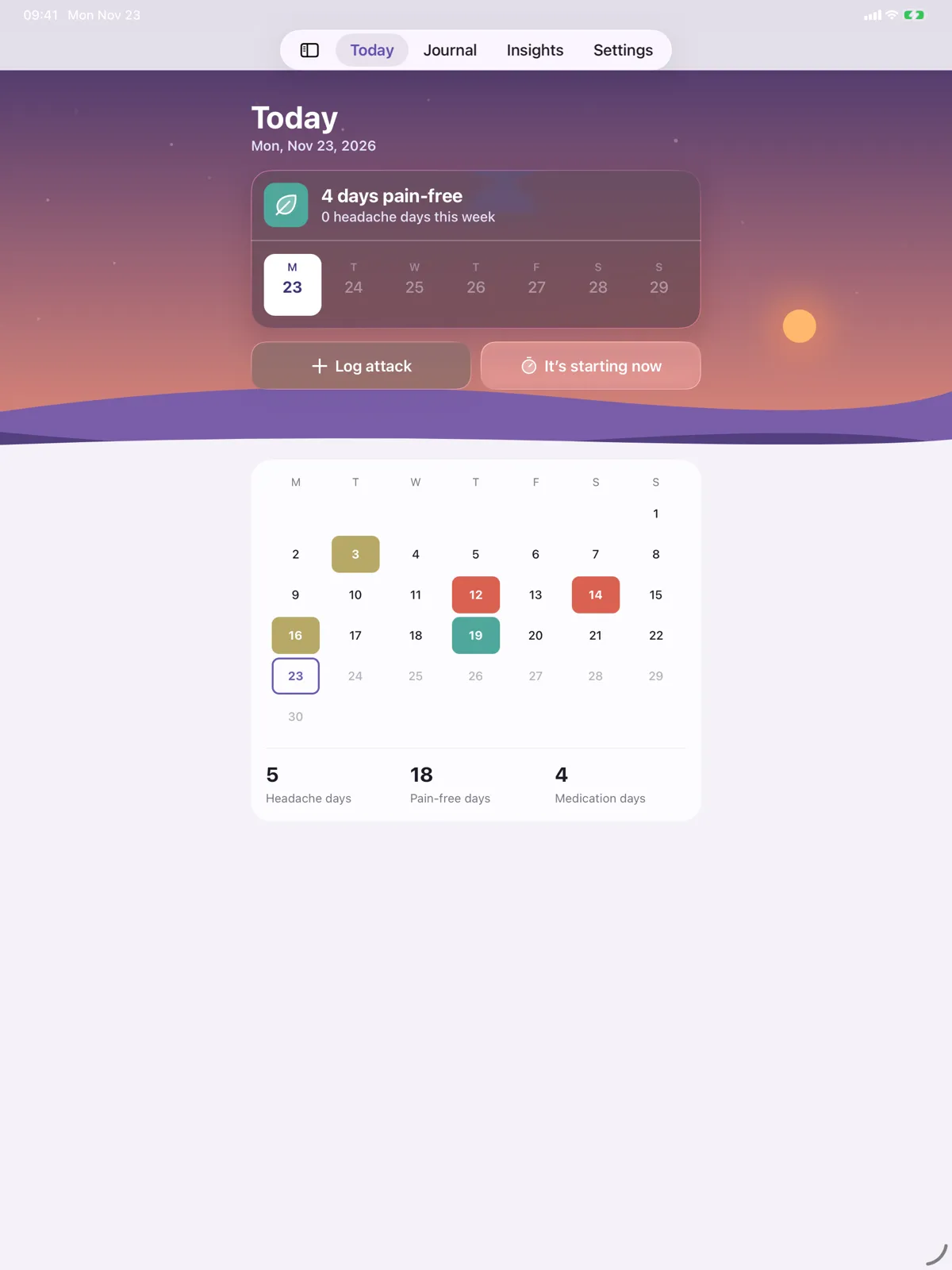
Made for iPad too
The same journal on a bigger screen — handy for going through the month with your doctor or a family member.
Three steps, no setup
Tap when it starts
Pick the intensity and the timer starts. That’s a complete entry — nothing else is required.
Add details later
When you feel better, add symptoms, triggers and medicines, and say whether the medicine helped.
Read the patterns
Insights, the month calendar and the doctor report fill in by themselves as you log.
What a migraine diary gives you
Exact durations
Start and end times instead of guesses, so “how long do your attacks last?” has a real answer.
Triggers you can act on
See which triggers show up most and which come with the worst attacks.
Medicine days counted
Monthly medicine days, with a gentle warning when you get close to overuse limits.
The weather question
Air pressure is saved with each attack, so you can test the weather theory on your own data.
Doctor-ready PDF
A short report that fits a short appointment — headache days, attacks, triggers and medicines.
Gentle reminders
An optional evening check-in, plus “Did it help?” follow-ups for medicines without a rating.
Private by design
Your migraine journal is stored on your device. There’s no account to create. You decide where backups go.
- No sign-up — open the app and log
- Back up to Files, iCloud Drive or Google Drive
- Export a spreadsheet (CSV) any time
- Dark and light themes with low-glare colours
Get more out of tracking
Practical guides you can use with or without the app.
How to keep a migraine diary
What to write down for each attack, and how to keep it up when you feel awful.
Read the guide →How to find your migraine triggers
A step-by-step way to tell real triggers from coincidences.
Read the guide →Barometric pressure and migraines
What “weather migraines” are and how to test the link on yourself.
Read the guide →What to bring to a migraine appointment
The numbers doctors ask for, and a one-page report template.
Read the guide →Medication overuse headache
The day limits for painkillers and triptans, and how to count them.
Read the guide →How to count headache days
Headache days vs attacks, and what episodic and chronic migraine mean.
Read the guide →Questions, answered
Is Migraine Tracker free?
Yes, it’s free to download, and logging attacks, the calendar and basic insights are free. An optional Premium subscription unlocks all insights, the doctor report and your own triggers, symptoms and medicines.
What should I record in a migraine diary?
For each attack: when it started and ended, how bad it was, symptoms such as aura or nausea, possible triggers, and any medicine you took and whether it helped. Migraine Tracker asks for these in that order, and only intensity is required.
How do I find out what triggers my migraines?
Log possible triggers with every attack for at least two or three months, then compare how often each one appears. Look for triggers that come up again and again, not just once. The app’s Triggers insight does this counting for you.
Can the weather really cause migraines?
Many people with migraine report weather as a trigger, and some studies link attacks to falling air pressure, but the evidence is mixed and it varies from person to person. Saving the air pressure with each attack lets you check it against your own history.
What should I bring to a migraine doctor appointment?
Bring your number of headache days per month, how long attacks last, how severe they are, which medicines you take and on how many days, and what helps. A diary covering the last one to three months answers most of these questions.
Where is my data stored?
On your device. There’s no account. You can back up your journal to Files, iCloud Drive or Google Drive and export a CSV spreadsheet. If you turn on air pressure, only a rough area (about 10 km) is sent to Open-Meteo to look up the weather.
Is there an Android version?
Not yet. Migraine Tracker is available for iPhone and iPad now, and an Android version on Google Play is coming soon.
How many painkiller days are too many?
Headache specialists use about 10 or more days a month for triptans or combination medicines, and 15 or more days for simple painkillers, as the levels linked to medication overuse headache. Talk to your doctor before changing how you take medicine.
Start your migraine diary tonight
One tap on the next bad day is all it takes. The patterns build up from there.